
The Evolution of Real Estate in New Jersey
By: Michele Lerner
As the U.S. celebrates its first 250 years, New Jersey residents are reflecting on the history of their communities, which is intertwined with the nation’s past. Each region, town, and neighborhood has its own story, but some themes thread throughout their narrative. As farmlands morphed into villages, villages into towns, and towns into cities, New Jersey changed from an agricultural state to one driven by the Industrial Revolution, connected by railroads, and eventually by cars. Throughout these phases and into today, New Jerseyans continue to focus on an important element for generational stability and for wealth building: real estate.
“Today people think of home as a place to live or as an investment, but in the colony’s earliest days homeownership represented freedom from oppression,” said Joe Grabas, a Freehold-based certified title professional, expert in historical land title research, and author of Owning New Jersey. “The freedom to own real estate opened the door to greater success in life. Until the mid-19th century, you couldn’t vote unless you owned land. That meant people who owned land controlled the government.”
In his own family, said Grabas, some of his ancestors from Poland came to America to throw off the feudal system that limited land ownership to only a select few people.
“The classic American Dream—the desire to own land and a home—is a theme throughout American history that holds true in New Jersey,” said Grabas.
COLONIAL AND EARLY FEDERAL TIMES
In the 1600s, when the first European visitors arrived in what is now New Jersey, the area was populated by approximately 8,000 Indigenous people in a network of communities. From the early 1600s into the mid-1700s, English and Dutch settlers began to establish farms and colonies in New Jersey, joined by Swedes, French Huguenots, Walloons from Belgium, Germans, Finns, Welsh, Scots, and Scots Irish settlers, according to the New Jersey’s official history.
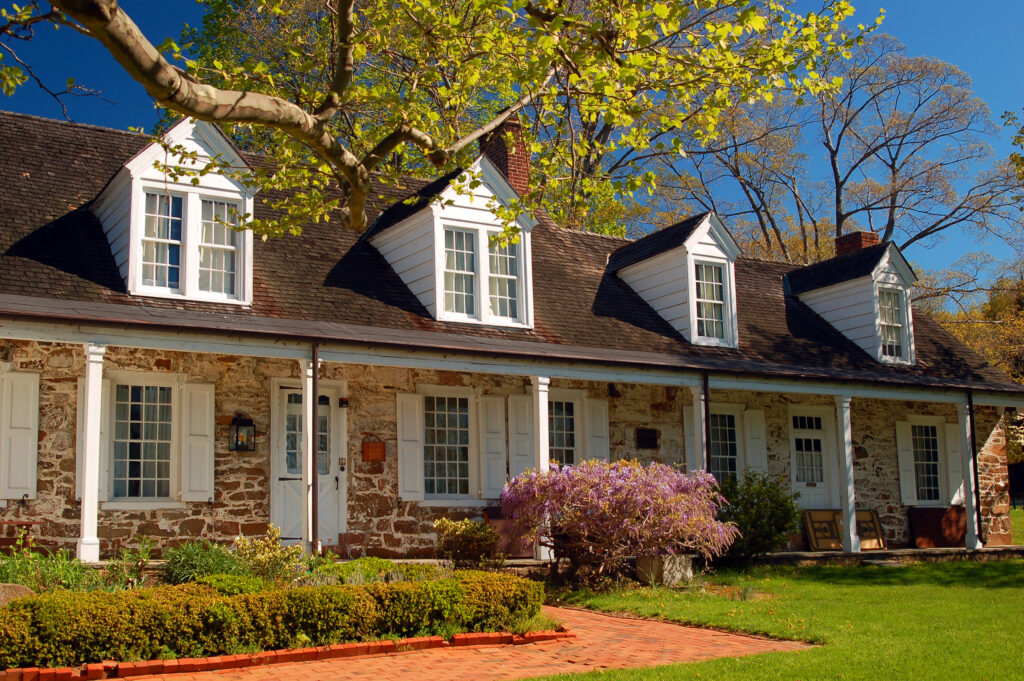
“Haworth, Ridgewood, and other nearby towns were initially mostly Dutch farms, so the farmhouses were mostly Dutch colonial style,” said Beth Potter, Haworth Borough Historian, a library assistant at the Haworth Municipal Library, and owner of HouseTales, a service that researches the history of old houses in Haworth and nearby towns.
The town of Watchung and other nearby areas in Somerset County were first settled in the early 1700s by farmers moving from surrounding towns, according to Susan Tucker, a Realtor® with Coldwell Banker Realty in Watchung.
“Wealthy families moved from Plainfield in the 1800s, which was an elegant city at that time, and bought farms with 100 to 300 acres in Watchung,” said Tucker. “They built grand houses on those farms and in town. We still have historic homes standing from before the revolution and the late 1700s.”
Historic preservation groups and individuals have saved many properties over the past 250 years. For example, in Trenton, the Old Eagle Tavern is estimated to be the oldest commercial building still standing in town, according to Preservation New Jersey. Built in 1765, the Tavern was originally home to Robert Waln, a U.S. Representative and business owner. It was converted into a tavern in 1817 and has since been a restaurant, hotel, office, and apartment. The City of Trenton is currently restoring and renovating the building as a tourist attraction.
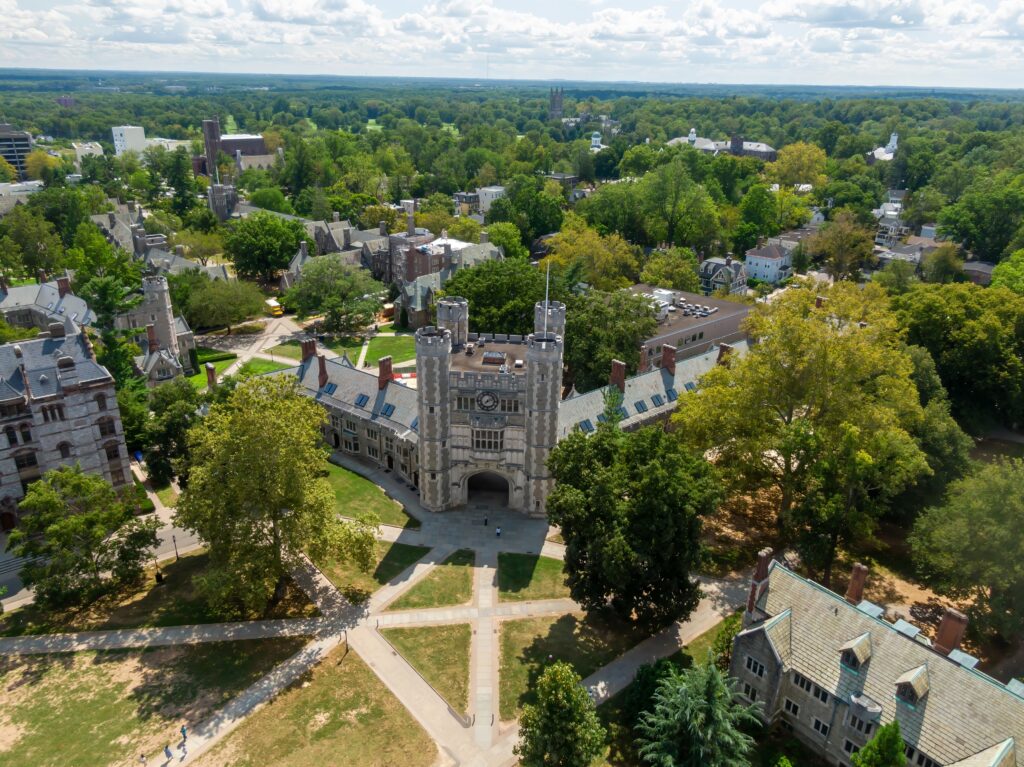
David Schure, a Realtor® and broker associate with Callaway Henderson Sotheby’s International Realty, who is active with historic preservation groups in Princeton, hopes the 250th anniversary of the U.S. will spark renewed enthusiasm for landmark buildings. He became interested in preservation work during the Bicentennial.
Bicentennial. “Princeton was settled by colonists in 1683, primarily based on land grants to William Penn that were subdivided,” said Schure. “Quakers and Europeans settled along Stony Brook Creek for irrigation. The College of New Jersey, which eventually became Princeton University, was founded in 1746 in Elizabeth, then moved to Princeton in 1756.”
Queen’s College, which eventually became Rutgers University, was established in 1766, which, according to the New Jersey government, made New Jersey the only North American colony with two chartered colleges at that time.
“Princeton University is central to the town’s development, but wealthy people were also drawn to the area and built estates here like Morven, which was built in the 1750s by the Stockton family,” said Schure. “Smaller houses in town and outside town belonged to local business owners and landowners.”
Morven Museum and Garden, now a historic site open to the public, was built by Richard Stockton, a signer of the Declaration of Independence.
Further south, many of the earliest residents of Camden and Gloucester Counties moved north from Salem County along Newton Creek and were primarily from Ireland and England, according to Douglas McVarish, a retired historic preservation expert in Collingswood, and author of Researching the History of a New Jersey House and Collingswood, New Jersey: A History in Buildings and Landscapes.
“Very few homes are still standing from that era, but there are some archaeological sites and graveyards,” said McVarish. “All of South Jersey was agricultural at the time and settled along the Delaware River plains. The inland area near Collingswood is about 60 miles from the Atlantic Coast and about five miles from Philadelphia.”
Large farms, some of them with more than 100 acres, were the norm in places that are now highly developed, such as Cherry Hill, said McVarish.
“In Cape May, Salem, and Cumberland Counties, there’s still an agricultural economy,” said McVarish. “Partly because of the climate there, but also there were fewer railroad lines built into that part of the state.”
RAILROAD EXPANSION: CONNECTED TOWNS
The industrial revolution and the expansion of railroads transformed New Jersey from its agrarian and colonial roots into a series of connected towns and spokes linked to the powerhouse locations of New York City and Philadelphia.
“If you look at a railroad map of New Jersey from 1887, you’ll see an extraordinary number of rail lines all across the state,” said Grabas. “In 1831, J.P. Stevens, a textile and manufacturing industrialist, bought a train engine and built a circular railroad on his property. Within 60 years, the entire state was covered by rail lines, especially the Northeast.”
Other industrialists changed the landscape of New Jersey, including a silk baron named Catholina Lambert in Paterson, who built Lambert Castle in 1892, according to Grabas. The castle is now a museum and home to the Passaic County Historical Society.
As Philadelphia grew, Camden became an industrial center with a ferry to Philadelphia. “Collingswood pre-dates the railroad, but many towns in New Jersey started when the railroads were built,” said McVarish. “Collingswood had some small industry at the time, such as a turbine manufacturer, a company that used eggs to make photo paper, and glassmakers.”
Some of New Jersey’s growth patterns were tied to summertime escapes from New York, Newark, and Philadelphia, made possible by railroads. At first, Grabas said, people opted for “wilderness camps” in Morris County and Mount Tabor, where they set up tents. Eventually, people built homes in those locations.
“The railroads changed everything,” said Potter. “Once the railroad connected Haworth and other towns to New York City in the 1870s and 1880s, that lured people from Manhattan and Brooklyn to build summer houses so they could get fresh air. They would take the ferry to Weehawken and then from there get the train to their country homes.”
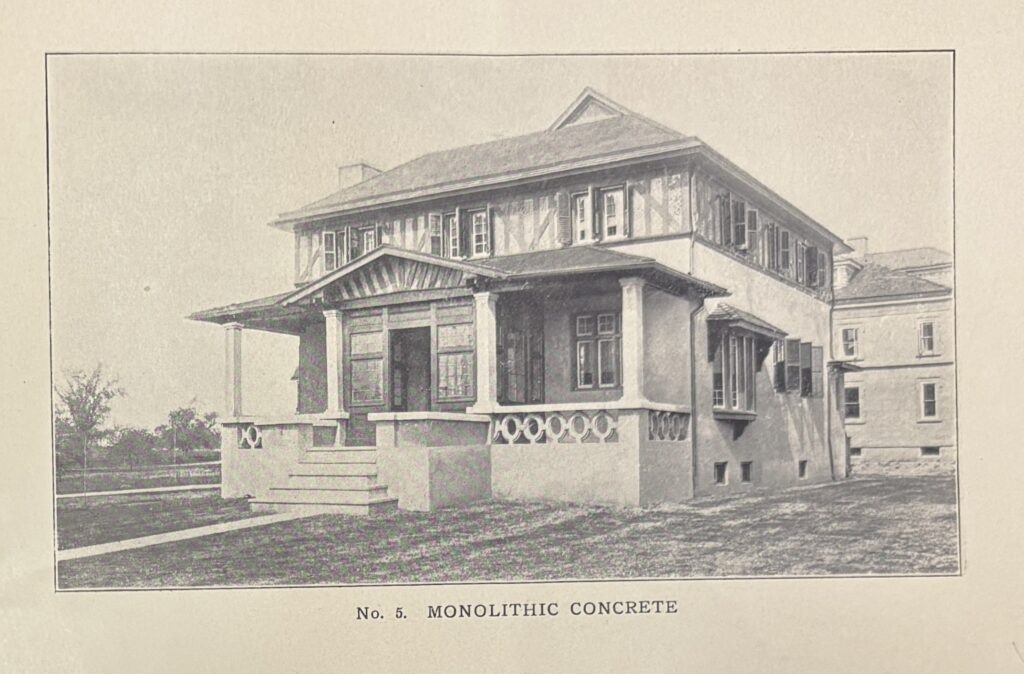
In the early 1900s, Haworth became known for its concrete homes built by the Franklin Society, said Potter.
“These were advertised as fireproof, insectproof houses, and they were very attractive and yet affordable,” said Potter. “Tradespeople and painters would buy them, and so would New York City merchants and preachers.”
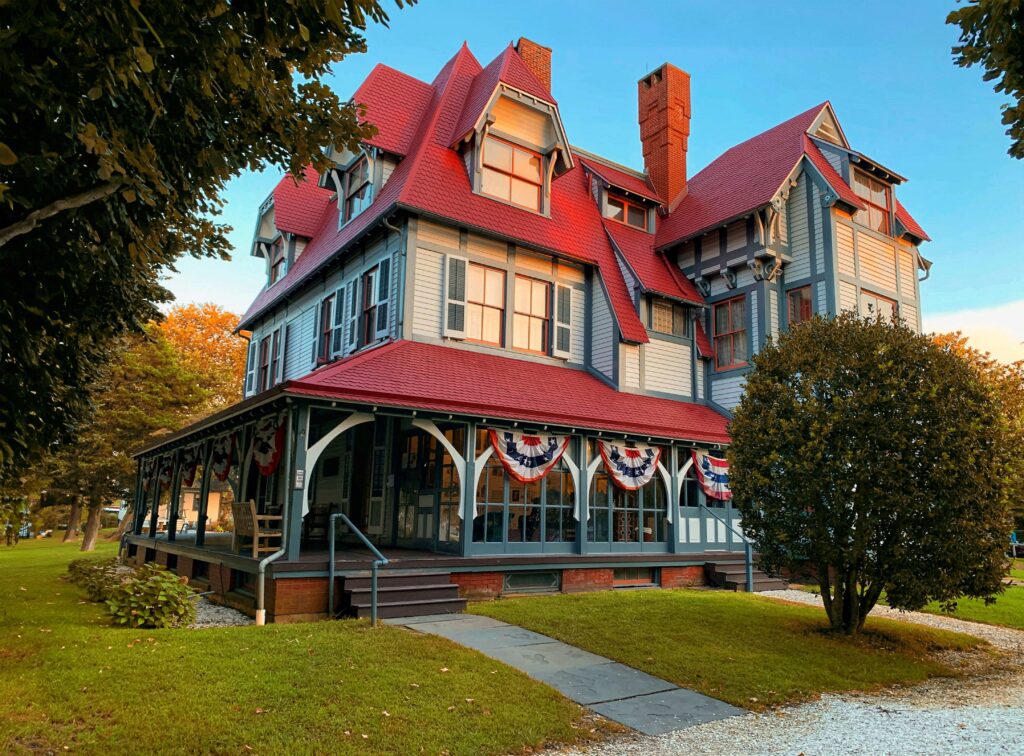
Some areas in South Jersey, such as Riverton and Wenonah, had large Victorian houses built in the late 1800s and early 1900s that catered to wealthy people who owned businesses or worked in Philadelphia, said McVarish. In towns near Camden, more affordable homes were built for people who worked in the shipyards during World War I and World War II, he said.
“Basically, these were single-family homes built for people moving out of rental housing and rowhouses in Philadelphia and Camden,” said McVarish.
At the time, these were homes for middleclass families, but today, McVarish pointed out, prices for those homes are too steep for first-time homebuyers.
“Cherry Hill was kind of the epitome of development in New Jersey in the early 20th century because smaller farmers started to suffer as larger farms with larger crops became more common,” said McVarish. “The smaller farms were sold to developers from Philadelphia who started neighborhood developments, especially close to the Ben Franklin bridge, so people could commute by streetcars, buses, and trolleys into the city.”
While that started in the 1920s and 1930s, after World War II, suburban development grew exponentially.
POST-WAR CAR CULTURE AND SUBURBAN DEVELOPMENT
New Jersey’s car-centric phase began as soon as cars became more affordable to average families, leading to more diversity in suburban locations as some people left behind crowded cities.
“My own family of Poles and Italians, who settled in the Bronx and Newark, moved out of the city neighborhoods to Irvington, then to Linden, East Brunswick, and now I live in Freehold,” said Grabas. “They liked the idea of having a real backyard and a little bit of land instead of a front stoop shared with neighbors.”
Since Watchung didn’t have its own direct railroad connection and residents needed to drive 12 to 15 minutes to nearby stations, a bigger impact on the town came when Route 78 was built in the late 1960s, said Tucker.
“That created a boom for the whole region because suddenly we were viable as a commuter town to New York City,” said Tucker. “We saw a lot of development in the 1960s and 1970s related to that.”
While many communities changed due to rail or road connections, Tucker said the leaders in Watchung were smart to establish strict zoning laws in the 1960s that required at least 1.3 acres per house.
“That helped our community maintain its woodsy, hilly character and stopped it from being chopped up into smaller lots,” said Tucker. “Between our hills, which make it hard to develop, plus the zoning, most homes here are custom-built individual homes rather than subdivisions.”
While the university was central to Princeton’s development, its train and car access to New York City was important.
“In the 1950s and 1960s, mid-century modern houses became popular in Princeton,” said Schure. “You had a mix of academics who wanted interesting or novel houses, professionals in the town, and executives at the pharmaceutical companies in town with average or above average salaries who were also interested in new designs.”
Schure said the School of Architecture at Princeton drove some of the enthusiasm for modern designs, along with the mix of international and European academics who came to the university and could afford to buy land just outside town for new homes. Today, he said, more buyers want to be closer to town for walkability.
“When the train service stopped in the 1950s to Haworth, we got better bus service, and the population just continued to build,” said Potter. “We’re not a big town, but we’re about an hour from New York in traffic, have good schools, and plenty of trees, so that’s kept our population stable.”
Unfortunately, home prices have risen dramatically over time, with prices at $2 million and up to live there, said Potter.
“A teardown just sold for $1.2 million, and once the new house is built, it will be worth about $3 million,” said Potter. “But nearby towns with train service, like Montclair and Ridgewood, are even more expensive.”
HOUSING MANDATES AND NEW URBANISM
The Mount Laurel Doctrine, an affordable housing requirement established through a series of decisions by the New Jersey Supreme Court, creates a constitutional obligation for every New Jersey municipality to provide its fair share of affordable housing. Each town must create its own Housing Element and Fair Share Plan, but they have flexibility in how they meet their obligations. Still, enforcement of this law is driving change in most communities.
“The Mount Laurel Doctrine means every town has some development of affordable housing, whether it’s townhouses or condos or smaller single-family homes,” said Tucker. “Builders can apply to build market-rate housing and include affordable units.”
Each town can decide whether they want to approve mixed-income housing, age-restricted housing, special needs housing, or build 100% affordable developments, as long as they meet state requirements to set aside housing accessible to individuals and families who meet income restrictions.
In addition to affordable housing mandates and the desire for walkable towns with access to public transit, the pandemic changed some priorities for homebuyers.
“In the 1980s and 1990s, people would drive farther and farther to afford a house, but then when the pandemic hit, and more people could work remotely, people were able to move even farther to places like Cape May without any commute at all,” said Grabas. “Now that more companies require people to work in an office, we’ll see if that changes priorities again. Still, more people can work remotely than in the past, so at least some of them have that advantage of living anywhere in the state.”
FOR MORE INFORMATION ABOUT NEW JERSEY HISTORY AND HOUSING, TRY THESE RESOURCES:
• New Jersey State History
• Mount Laurel Doctrine
• Owning New Jersey by Joe Grabas
• Collingswood, New Jersey: A History in Buildings and Landscapes by Douglas McVarish
• Researching the History of a New Jersey House by Douglas McVarish
• Mapping New Jersey: An Evolving Landscape by Maxine Lurie and Peter Wacker
• Owning the Earth: The Transforming History of Land Ownership by Andro Linklater