
Mercer County
By: Erin McFeeters
At the center of it all is a county abundant in parks and preserved open spaces, with a community culture rich in history, arts, and education. Mercer County, while officially established in 1838, was historically significant before it officially bore a name. The name it bears, Mercer, is after General Hugh Mercer, who played a crucial role in the New Jersey Revolutionary War battles and died following the Battle of Princeton.
“Mercer County is named for Brigadier General Hugh Mercer, the highest-ranking American officer to die from wounds sustained at the Battle of Princeton,” said Curator of Collections and Research at the Historical Society of Princeton Stephanie Schwartz. “When the county was established in 1838, it was named in recognition of his sacrifice during one of the Revolution’s defining campaigns.” Beyond the Battle of Princeton, Mercer County’s location in the Delaware River Corridor placed it in the heart of the early days of the Revolutionary War.
“All the armies are traveling up, down, and along it [Mercer County]. It’s hard not to find American forces, whether militia or Continental Army,” said Old Barracks Museum Assistant Director of Interpretation & Curation Mark A. Turdo. “So, at any given moment, Mercer County is occupied by some or all of these forces. Especially early war, where the focus was in the mid- Atlantic and New Jersey in 1776 into 1777. This is the heart of what’s happening.”
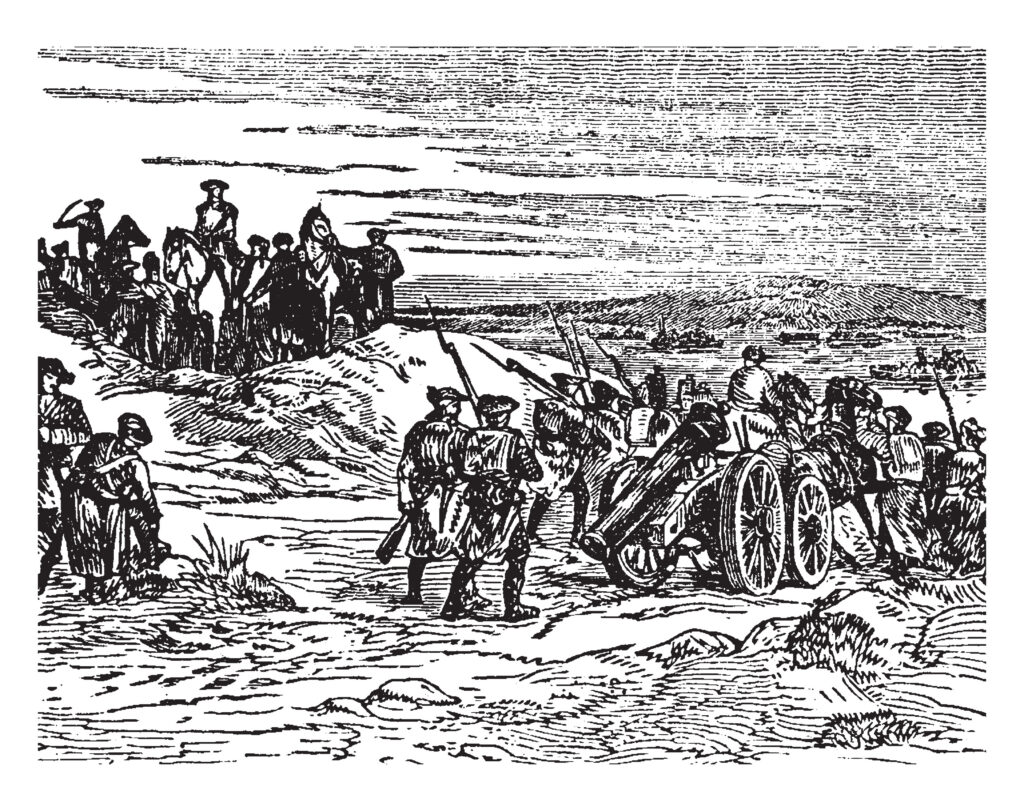
The area was paramount to the Continental Army’s ultimate success and a fundamental part of America’s founding. It’s here that George Washington crossed the icy Delaware River and where the Old Barracks helped sick and injured Continental Army soldiers recuperate.
Filled with hospitals and supply depots, Mercer County became a rallying point for the Continental Army, especially for soldiers coming from the southern part of the country, according to Turdo. “Trenton becomes this place where they seem to meet, form up, and then go meet the Continental Army wherever they’re headed,” said Turdo.
The county also boasts Nassau Hall, which briefly served as the U.S. capital, and the Alexander Douglass House, which hosted George Washington and army officers while they planned the Second Battle of Trenton.
“The reason that Trenton, Princeton, and the crossing are so important is because it’s this moment where the army and thus the revolution either is going to survive or it’s all going to fall apart,” said Turdo. “I often say that the Battles of Trenton, because there are two, what that’s doing, it’s defending and preserving the Declaration of Independence in American liberty. All of that is happening in Mercer County, not just Trenton. It goes off to Princeton, and then they push out from here.”
This deep-rooted history at America’s start cultivated dedication to education, with Princeton University, The College of New Jersey, Rider University, Thomas Edison State University, and Mercer County Community College all within Mercer County’s borders. Creativity is also abounding in arts centers and theatres. This summer, see McCarter Theatre’s rendition of All the Devils Are Here, visit one of TIME Magazine’s World’s Greatest Places—The Princeton Art Museum, sign up for an art class at the Arts Council of Princeton, walk the grounds of the renowned Grounds for Sculpture, or stroll the New Jersey State Museum’s new exhibit: The Power to Change: Revolutionary Stories from the New Jersey State Archives.
Beyond arts and education, there’s so much to love about Mercer County towns, all unique in their offerings to residents and visitors.
Trenton, the capital of the state and the county seat, plays a vital role in our state and local government, and houses the largest employer in the county, The State of New Jersey. It’s also known for the CURE Insurance Arena and the historic 19thcentury homes in the Mill Hill district.
Princeton, a college town known for its downtown area and Palmer Square, has unique restaurants and shops, and of course, Princeton University.
“When people think of Princeton, they usually think of the Battle of Princeton, Princeton University, or Albert Einstein,” said Schwartz. “But that’s really just scratching the surface. Princeton has an incredibly rich history, and one of the things I love most about my job is helping people discover the stories they never knew were here.”
Hopewell Township, a more rural area of the county, is filled with preserved farmland and is where George Washington landed after his trip across the Delaware River.
Hamilton Township, the most populous town in Mercer County, has 94,000 residents, according to the U.S. Census, and is known for Gardens and Veterans Park, historic neighborhoods, along with Grounds for Sculpture, a 42-acre sculpture park and museum.
Robbinsville Township is a rural community with a growing residential area and downtown. It’s home to DeLorenzo’s Tomato Pies and Papa’s Tomato Pies, both must-visit spots for Trentonstyle tomato pie.
With so many more such as East Windsor Township, a suburban area with plenty of shopping; Ewing Township, home to The College of New Jersey; Hightstown Borough, known for its historic downtown; Hopewell Borough, an antique store filled historic borough; Lawrence Township, home to Meatheadz Cheesesteaks and the Gingered Peach; Pennington Borough, a small town with main street shopping; and West Windsor Township, a mainly residential area with Princeton Junction train station and Mercer County Park.
The best part: Mercer County’s central location puts everything in the Garden State at your fingertips. The NJ Transit Northeast Corridor line goes from Trenton all the way to NY Penn Station, while you can take SEPTA from the Trenton Train Station to arrive in Center City Philadelphia. Interstates 95, 195, and 295, along with U.S. Route 1, run right through Mercer County, making it easy to commute to work or visit the Jersey Shore once the weekend hits.
Across the county, the single family median sales price is $500,000 year-to-date, $100,000 less than the New Jersey single family median sales price. Inventory is on the rise in Mercer County, with 596 single family homes for sale in June 2026, 12.5% more than in June 2025. Homes are on the market for more days than last year, but demand is strong, with offers consistently above the listing price.
Take a Step Back in American 250 History
Six months after the American colonies came together to sign the Declaration of Independence, the Ten Crucial Days of the Revolutionary War transpired within Mercer County’s borders.
“Present-day Mercer County was the setting for the Ten Crucial Days campaign, including the Battle of Princeton, during which a series of American victories revitalized the Continental Army, renewed support for independence, and helped turn the tide of the Revolutionary War,” said Schwartz.
It began with George Washington and his troops crossing the Delaware River and concluded with the Battle of Princeton. Ultimately, this series of battles and strategies changed the course of the war and cultivated this country’s identity of the United States of America, according to Turdo.
“After the Ten Crucial Days, after everything that happens here, people who are not already in the army say, ‘Hey, you know what, maybe this revolution will work, maybe we can defend it.’ You see enlistments start to go up. You see USA buttons being used. You see U States or USA being stamped on guns and equipment,” said Turdo. “Suddenly, there’s an identity that is able to exist that didn’t exist the year before. That’s where that very much comes right out of the Ten Crucial Days. There’s a direct tie. So not only are they defending the Declaration, but they believe in this new identity of the United States of America.”
Alexander Douglass House
Trenton
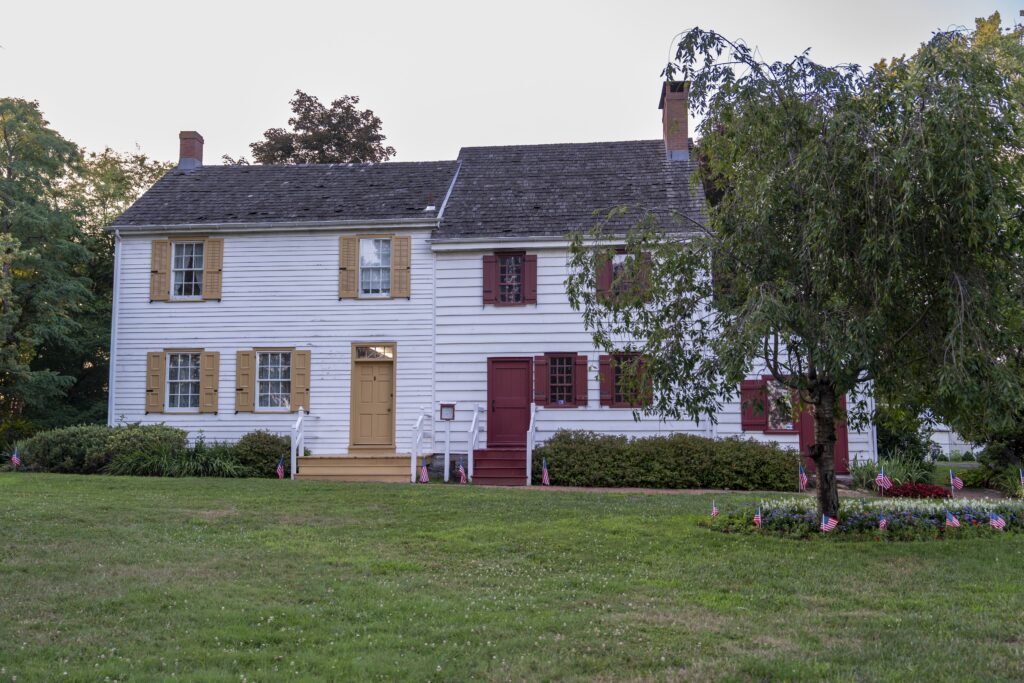
While not open to visitors without an appointment, the Alexander Douglass House is the former home of Continental Army Quarter Master Alexander Douglass, if you couldn’t guess by the name. During the Second Battle of Trenton, Washington used the house as his headquarters, according to revolutionarynj.org, and held a council of war with his officers.
Johnson Ferry House
Titusville
Located on the grounds of Washington Crossing State Park, the house is said to have been used by George Washington and his officers during the Christmas night crossing of the Delaware River, according to the Washington Crossing Park Association. Today, visitors can tour the house, which is furnished with furniture from the revolutionary era.
Morven Museum & Gardens
Princeton
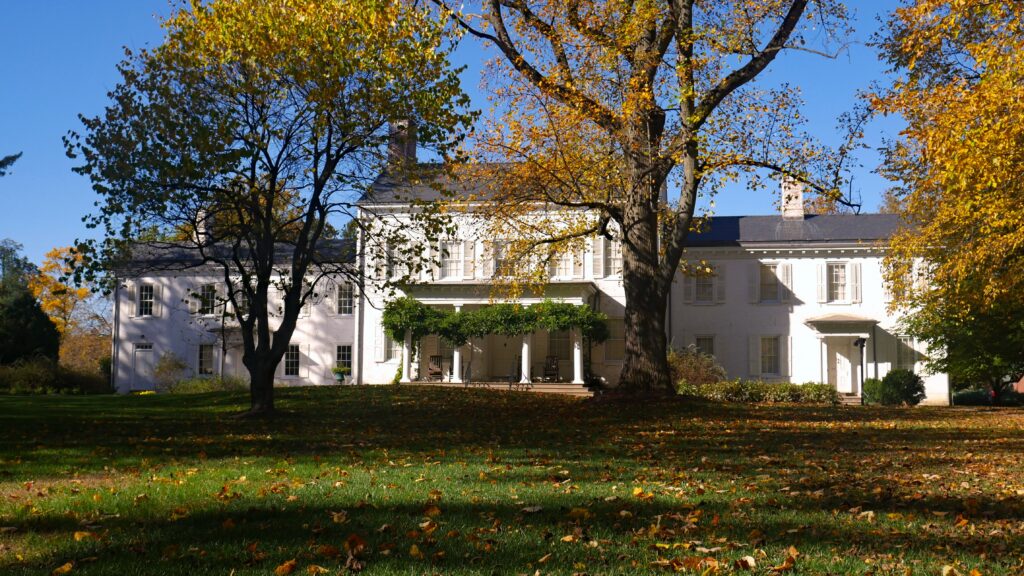
Essential to New Jersey history, the Morven is the former home of Declaration of Independence signer Richard Stockton. Before Drumthwacket, Morven was New Jersey’s first official governor’s mansion and the home to Gov. Edge, Gov. Meyner, Gov. Hughes, Gov. Cahill, and Gov. Byrne. In the late 1980s, Morven officially transitioned into the museum it is today, according to morven.org.
Nassau Hall
Princeton
Princeton University’s campus was once a battleground, according to the Princetoniana; troops from both armies occupied Nassau Hall until British troops surrendered it to George Washington in 1777. From June to November 1783, Nassau Hall served as the nation’s capital and housed the Continental Congress. Outside of the building, known as Cannon Green, there’s a Revolutionary-era cannon that was abandoned after the Battle of Princeton. It remained there until it was used in New Brunswick during the Battle of 1812. It was returned and buried on Cannon Green in 1840, according to Princeton University, and is one of the oldest publicly displayed cannons in the U.S.
Princeton Battlefield State Park
Princeton
The Battle of Princeton was the last battle of the Ten Crucial Days, where troops surprised and defeated British troops. It was here that General Mercer was fatally wounded on the battlefield. Not far from the spot of his death is the Mercer Oak, which is believed to have once stood on the battlefield, according to the Department of Environmental Protection State Parks, Forests & Historic Spots. While the original oak has since fallen, a sapling from the tree now stands next to the stump.
John Abbott II House
Museum Hamilton Township
Located in the town’s Veterans Park, the historic home of John Abbott II is said to have helped conceal money during the Revolutionary War. According to revolutionarynj.org, the state treasurer, Samuel Tucker, left money in the care of the Abbott family while fleeing the British in Trenton. The family hid the money in the cellar, hidden under broken dishes and other household items. So, when British troops ransacked the home, they only found Tucker’s trunk filled with personal effects and a small amount of funds. Today, the museum is open for tours every weekend to experience the revolutionary era.
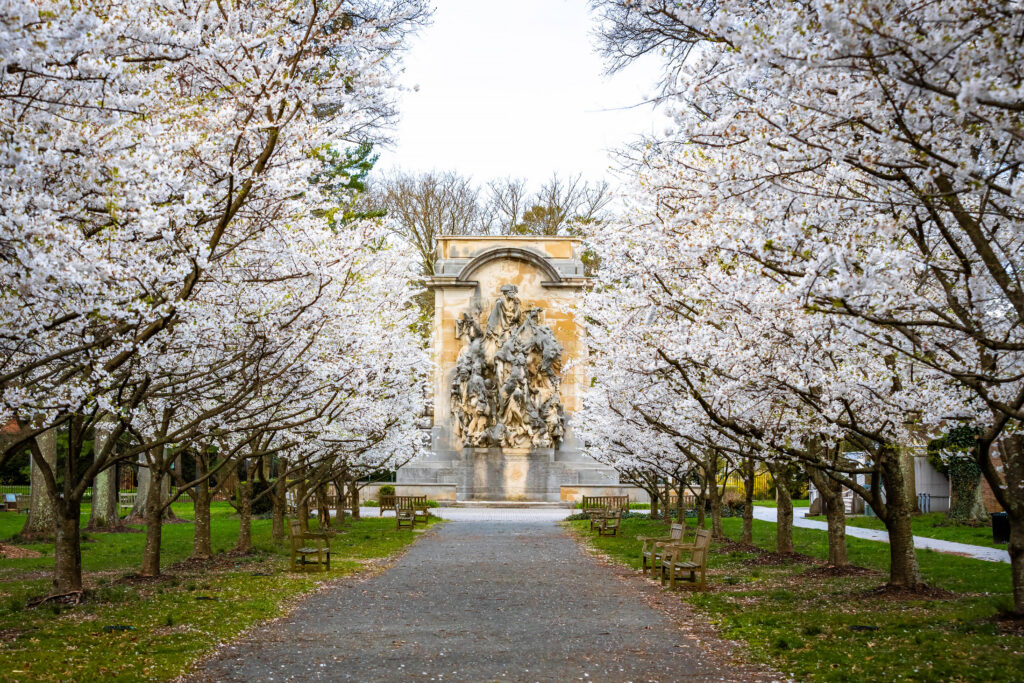
Trenton Battle Monument
Trenton
Towering over the city is a monument topped with General Washington himself commemorating the Continental Army’s victory at the Battle of Trenton.
Washington Crossing State Park
Titusville
Visit the spot where troops completed the perilous 10-hour Christmas night crossing of the Delaware River. Undergoing massive renovations, the park is expected to reopen this summer with a brand-new visitors center, new signage throughout the park for a more immersive experience, repaved roadways, and an exterior restoration of the Johnson Ferry House.
Old Barracks Museum
Trenton
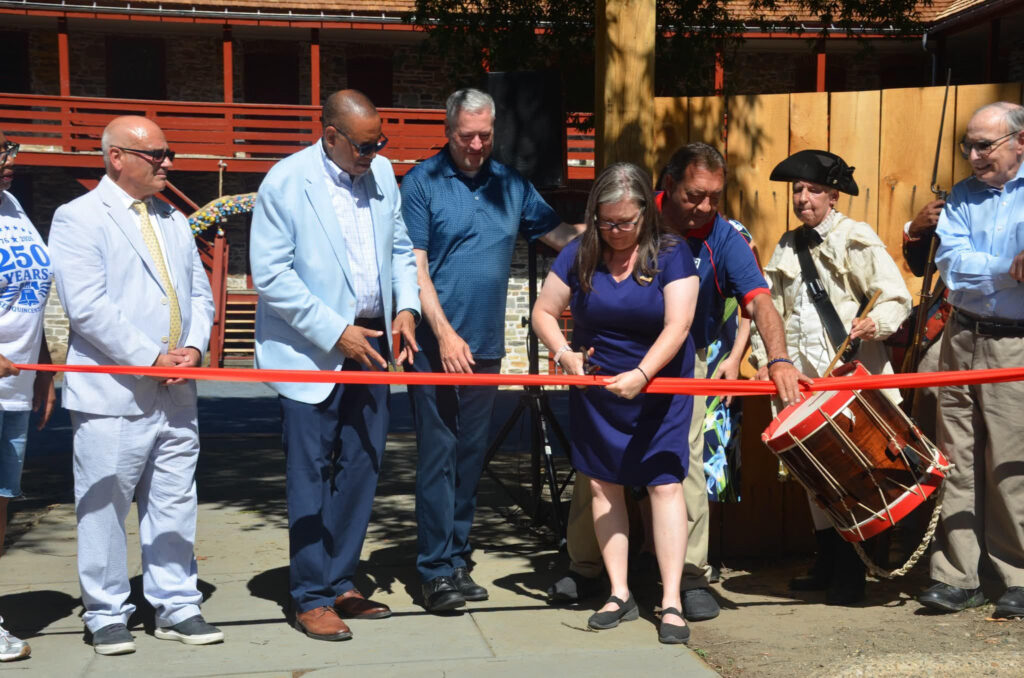
After undergoing extensive restoration, the Old Barracks Museum hosted its grand reopening on Independence Day with brand new exhibits, in addition to a complete refresh of the outside of the building. Since closing its doors temporarily last May, Turdo and his team of curators, archivists, and living interpreters have been hard at work reviving the history of the Old Barracks into an interactive experience for visitors of all ages.
“We invite you into the recreated spaces so you can see what it’s like to live in the barracks or be an officer,” said Turdo. “It’s meant to break down the museum wall of ‘I just listen as someone talks at me.’ We’re trying to get people to come in and be in the immersive experience.”
Unlike other battles, Trenton was already an established city, with combat occurring in the middle of town down the streets that are still present today, according to Turdo. When you walk along Warren and Broad Street, you’re walking on what was once a battlefield. “You get to literally be where these guys fought. Right where all of this action happened,” said Turdo.
During the war, the Old Barracks wasn’t necessarily where the fighting occurred, but it is known as a place where the Continental Army received their inoculations against smallpox. In light of Turdo and his team’s research, they discovered from 1777 forward to the end of the war, the Old Barracks served more patients as a recuperative hospital with hundreds of patients from around the colonies coming through to recover and heal, according to Turdo.
Fast forward to today, the museum will feature stories of these patients and where they headed next in the new exhibits, and the Old Barracks remains a glimpse back to the Revolutionary War era in a bustling capital city.
“The barracks itself historically was on the outskirts of town, and Trenton slowly encompassed it, enveloped it, and we’ve become this little oasis of the 18th century in the middle of a very modern city,” said Turdo. “Even the capital, which was built almost 40 years after the barracks, has been added onto and modernized, and it’s very different. We get to be this little 18th-century moment in the midst of all of this 20thcentury architecture and the way people like about that part of town.”